


A Modern College Classroom Isn’t About Technology – It’s About Flexibility
For years, the idea of a “modern classroom” was easy to spot – new screens on the walls, upgraded projectors, better AV, and rows of technology meant to signal progress.
But on most college campuses today, the real challenge looks different.
University administrators, campus planners, and facility teams are being asked to make learning spaces work harder than ever. Classrooms need to support hybrid instruction, active learning, collaboration, accessibility, and long-term campus planning – all while working within existing buildings, existing (or dwindling) budgets, and the daily reality of occupied campuses.
That means the conversations can’t start with technology.
It has to start with function.
How should the room work for students and faculty? How can the space adapt as teaching methods continue to evolve? What decisions made today will support the institution five or ten years from now?
A modern college classroom in 2026 isn’t defined by the latest technology. It’s defined by flexibility.
Because the best classroom upgrades aren’t about adding more – they’re about planning better.
Design Should Follow Learning, Not the Other Way Around
The traditional college classroom was built around one teaching style: lecture first, everything else second.
Rows of fixed desks facing a podium made sense when learning was centered around one person speaking and everyone else listening. But today’s classrooms are expected to do much more.
Faculty are balancing lectures with discussion, group work, presentations, and hybrid participation – sometimes all within the same class period. Students are learning through collaboration, problem-solving, and engagement, not just passive note-taking. The space has to support that shift.
That means modern classroom design starts by understanding how learning happens now, not by trying to force new teaching methods into old layouts.
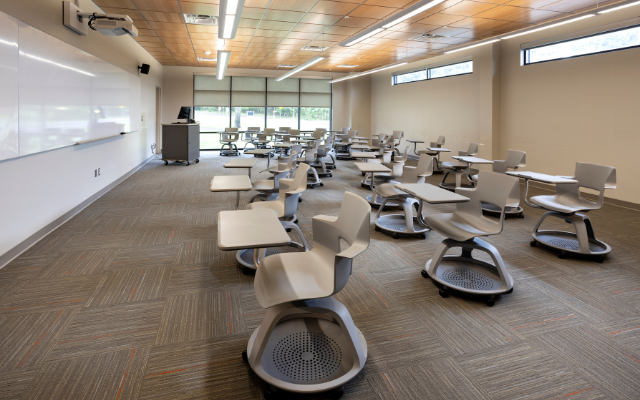
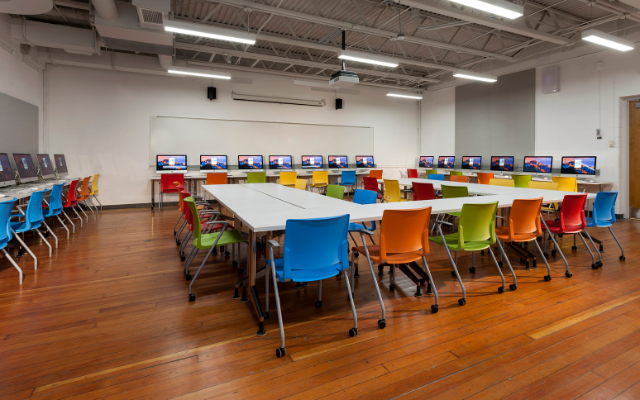
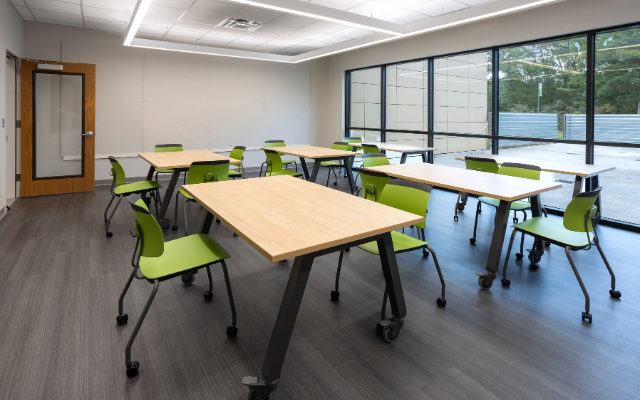
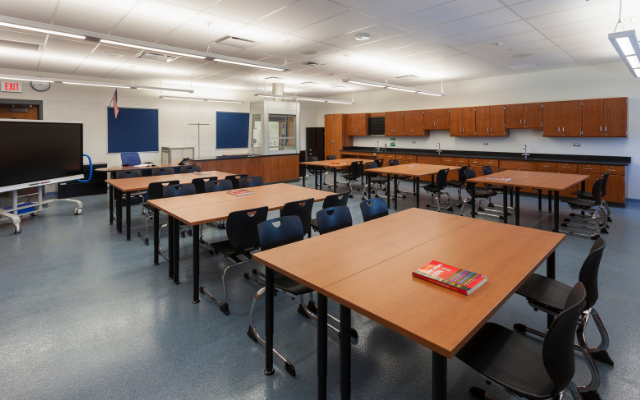
Flexible seating, multiple presentation points, better instructor mobility, clear sightlines, and spaces that allow students to interact with both faculty and each other all play a role. The goal isn’t simply to update the room – it’s to create an environment that improves how teaching and learning actually function.
Before selecting furniture or technology, the first question should always be: how does this space need to perform?
Flexibility is the Real Investment
Higher education institutions are making decisions with the long term in mind – and classroom design should be no different.
Teaching methods will continue to evolve. Technology will continue to change. Student expectations will keep shifting. The goal is not to design for one moment in time, but to create spaces that can adapt without requiring full renovation every few years.
That is where flexibility becomes the real investment.
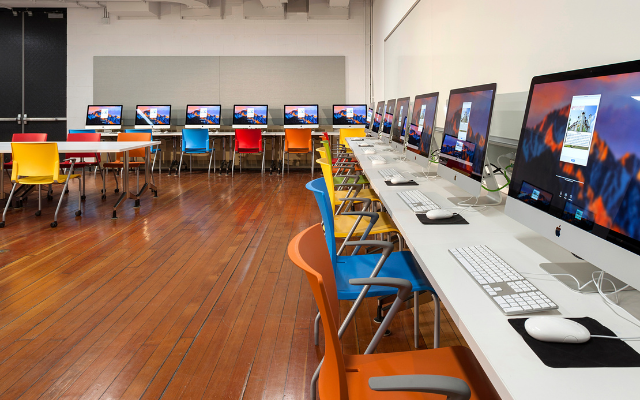
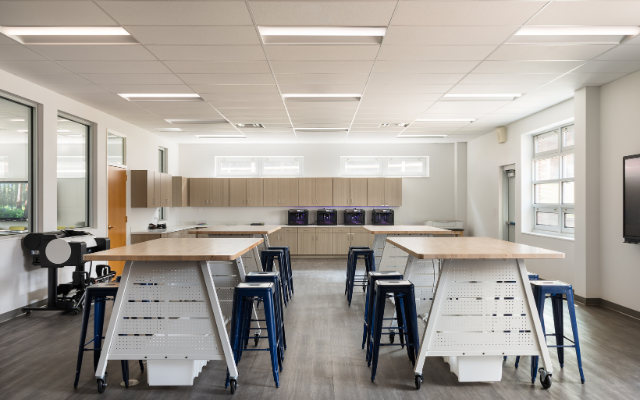
Movable furniture, adaptable layouts, accessible power and data, and infrastructure that supports the future change all create classrooms that stay useful longer. A room that can shift from lecture to seminar to collaborative work without major disruption delivers far more value than one designed around a single fixed use.
This is not about chasing trends or adding unnecessary features. It is about making thoughtful decisions early – ones that protect long-term performance, reduce future costs, and give institutions more options as needs change.
Future-ready classrooms are not built by doing more. They are built by planning smarter.
Hybrid Learning is an Operational Reality
Hybrid learning is no longer a temporary solution or a post-pandemic adjustment – it is part of how higher education operates.
Students expect flexibility in how they access learning. Faculty need spaces that support both in-person instruction and remote participation without creating extra complexity. Institutions are planning around the understanding that classrooms must serve both experiences well.
But successful hybrid classrooms are not defined by the most expensive technology in the room.
They are defined by how easily that technology works.
Clear sightlines, strong acoustics, reliable connectivity, and integrated systems matter far more than oversized displays or complicated setups that create frustration for faculty and students alike. If instructors need technical support every time they walk into the room, the design has already missed the mark.
The best technology is the kind people barely notice – because it works exactly the way it should.
Technology should support the classroom, not become the classroom.
Modern Classrooms Often Start with Existing Buildings
Most colleges and universities are not building entirely new academic spaces – they are working with buildings that already exist.
Older lecture halls, underused classrooms, aging academic buildings, and spaces designed for a very different teaching model are often the starting point. That means modern classroom design is usually less about new construction and more about making smarter use of what is already there.
This is where facilities planning becomes just as important as design.
Before walls move or finishes are selected, institutions need to understand what the building can support, where upgrades will have the greatest impact, and how improvements can be phased without disrupting campus operations. Sometimes the best solution is a full renovation. Other times, targeted improvements to layout, infrastructure, lighting, or accessibility create the biggest return.
Modernization does not always mean starting over.
Often, it means asking better questions about what the space can become – and building a clear path to get there.
Student Experience is Part of Performance
A classroom is not successful simply because it looks modern. A space DOES impact learning.
The finishes may be new, the furniture may be updated, and the technology may check every box – but if the space does not support focus, comfort, and usability, it still falls short.
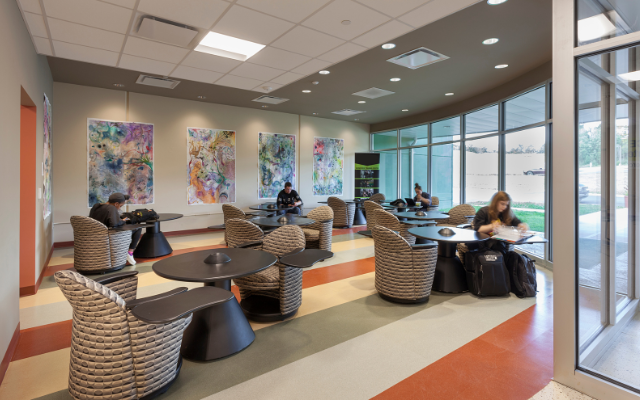
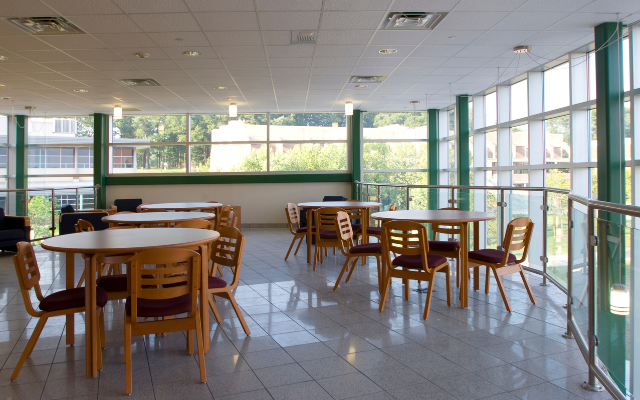
Lighting, acoustics, accessibility, thermal comfort, visibility, and the overall student experience all play a role in how a classroom performs. These are not secondary design decisions. They influence concertation, participation, engagement, and how students feel in the space.
They also shape how institutions are perceived.
Campus environments affect recruitment, retention, and overall student experience just as much as academic programming. A classroom that feels intuitive, comfortable, and functional creates a stronger learning environment and reinforces the institution’s long-term investment in its students.
Good classroom design is not just about creating a space that looks modern, it is about creating a space that works well for the people using it every day.
The best learning environments do both. They feel welcoming, intuitive, and visually strong because they are designed around function first. Lighting, acoustics, comfort, accessibility, and layout all shape how a space performs—and when those decisions are made thoughtfully, the result is a classroom that looks better because it works better.
That feels more balanced and truer to how colleges actually think about these spaces.
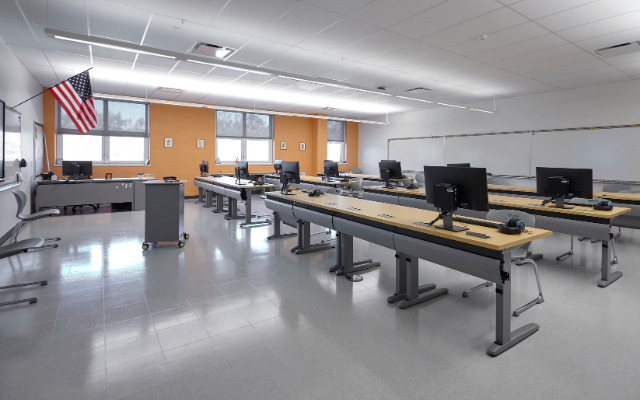
Better Classrooms Start with Better Questions
Modern classroom design is not about chasing trends or filling a room with more technology.
It starts with understanding how the space needs to function, how the instruction operates, and how those decisions support the campus long after construction is complete. The strongest classroom investments are the ones that create flexibility, not just for today’s students and faculty, but for the next generation of learning as well.
That means asking better questions from the start.
How should this classroom adapt over time? What improvements create the greatest long-term value? How can existing spaces work harder before new construction becomes necessary?
The best classroom upgrades happen before construction begins – with thoughtful planning, clear priorities, and a design approach focused on performance, not just appearance.
Because the modern college classroom is not defined by what is added to it.
It is defined by how well it continues to work.